I spent way too long trying to write like I thought writers were supposed to write.
You know the feeling? That pressure to sound literary. To craft sentences that feel important. To use words you’d never actually say out loud because somehow that makes the prose more legitimate.
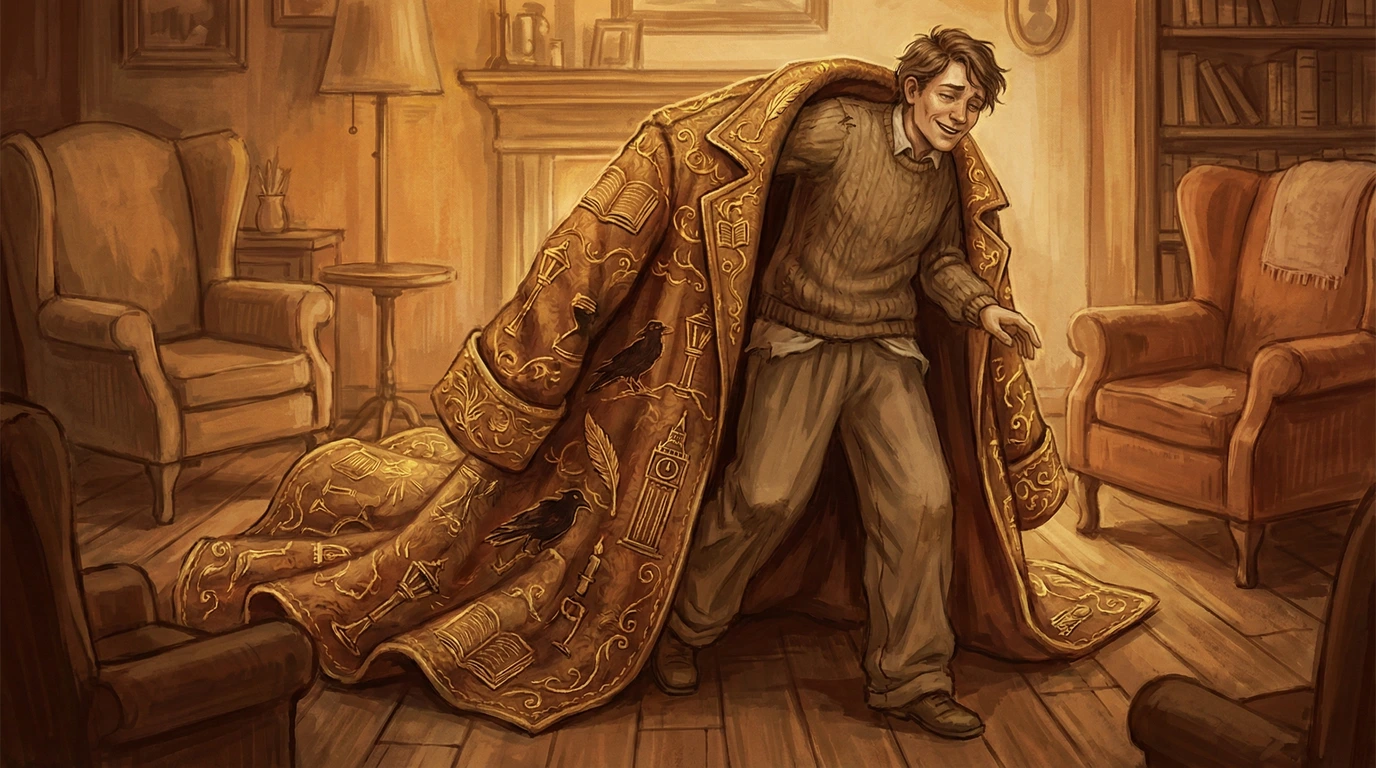
I’d sit there, drafting a scene, and catch myself reaching for phrases that felt borrowed. Stuff I’d absorbed from books I admired but didn’t fully understand. And the weird thing was, the harder I tried to sound like a “real author,” the more my writing felt hollow. Like I was wearing someone else’s coat and it didn’t fit right.
It took me embarrassingly long to figure out what was happening.
Here’s what I’ve learned, or what I’m still learning, really. There’s a difference between developing your voice and performing someone else’s idea of what good writing sounds like.
For a while, I couldn’t tell the difference. I thought the goal was to write sentences that impressed people. Sentences with weight. Sentences that announced themselves.
But impressive sentences don’t automatically make a story work. Sometimes they just get in the way.
I remember working on a short story last year. The draft was full of carefully constructed lines. Lots of metaphors. Lots of sentence variety that I’d manufactured on purpose because I’d read somewhere that good writers do that. And when I read it back, it felt exhausting. Not in a “this story is emotionally intense” way. More like “this writer is trying really hard and I can feel it.”
That’s not the reaction I wanted.
The shift happened slowly. I started paying attention to moments in my favorite books where the prose just disappeared. Where I forgot I was reading and just experienced the story.
Those moments almost never happened during the fancy passages. They happened during the simple ones. The ones where a character said something ordinary, or noticed something small, or sat in silence for a beat too long.
So I tried an experiment. I rewrote a scene using only words I’d actually use in conversation. No reaching. No performing. Just telling the story like I was explaining it to a friend.
And it was better. Not perfect, but better. The characters felt more present. The tension actually landed instead of getting buried under decorative language.
I didn’t expect that.
I think part of why this took me so long is fear. There’s this worry that if you write simply, people will think you’re not skilled. That accessible prose is somehow lesser.
But that’s not true at all. Simple doesn’t mean easy. Clarity is its own kind of craft. Getting out of your own way takes practice.
I still struggle with this. I’ll write a sentence that feels too plain and immediately want to dress it up. Add an adjective. Swap a common word for a fancier synonym. Make it sound more like “writing.”
Sometimes that impulse is right. Sometimes a sentence genuinely needs more texture or specificity.
But a lot of the time? The plain version was fine. The story didn’t need me to show off. It needed me to get out of the way.
This is the part I’m still figuring out. Because “write in your own voice” is advice that sounds helpful but doesn’t tell you much about how to actually do it.
Here’s what’s working for me so far.
First, I started reading my drafts out loud. Not skimming. Actually speaking the words. And every time I hit a phrase that felt awkward to say, I marked it. Those were usually the spots where I was performing instead of communicating.
Second, I gave myself permission to be boring in first drafts. To write “she felt sad” instead of hunting for a more elevated way to express that emotion. I can always revise later. But getting the story down without the pressure to be impressive helped me find what the scene actually needed.
Third, I started noticing when I was writing to sound smart versus writing to be understood. Those are different goals. And for fiction, I think being understood matters more.
Pick a paragraph from your current project. Something you’ve polished. Something you’re proud of.
Now rewrite it using only words you’d use when talking to a friend. No thesaurus. No reaching. Just explain what’s happening.
Compare the two versions. Notice which one feels more alive.
I’m not saying the casual version will always be better. Sometimes it won’t be. But doing this exercise showed me how often my “good writing” was actually just performance. And how much energy I was spending on performance that could’ve gone toward story.
I don’t want to swing too far the other way. Sparse, stripped-down prose isn’t automatically better than rich, layered prose. Some stories need more texture. Some voices are naturally more elaborate.
The goal isn’t minimalism for its own sake. The goal is intention. Knowing why you’re making the choices you’re making. And being honest about whether those choices serve the story or just serve your ego.
I’m not always good at that honesty. I still catch myself adding flourishes that don’t earn their place. I still feel that pull toward sounding literary.
But I’m getting better at noticing. And noticing is the first step.
My writing has gotten better since I stopped trying to sound like a real author. Not because I lowered my standards. Because I redirected my energy.
Instead of asking “does this sentence sound impressive,” I started asking “does this sentence do its job.” Does it move the story forward. Does it tell me something about the character. Does it create the feeling I want the reader to have.
Those questions are harder to answer. But they’re the right questions.
I’m still learning. Still experimenting. Still writing scenes that don’t work and trying to figure out why. But I feel less like I’m performing now. More like I’m actually telling stories.
And that feels like progress.
What about you? Have you ever caught yourself writing to sound like a writer instead of just writing the story? I’d love to hear what helped you break out of that.