There’s a specific point in every story I write where I start to believe I’ve made a terrible mistake.
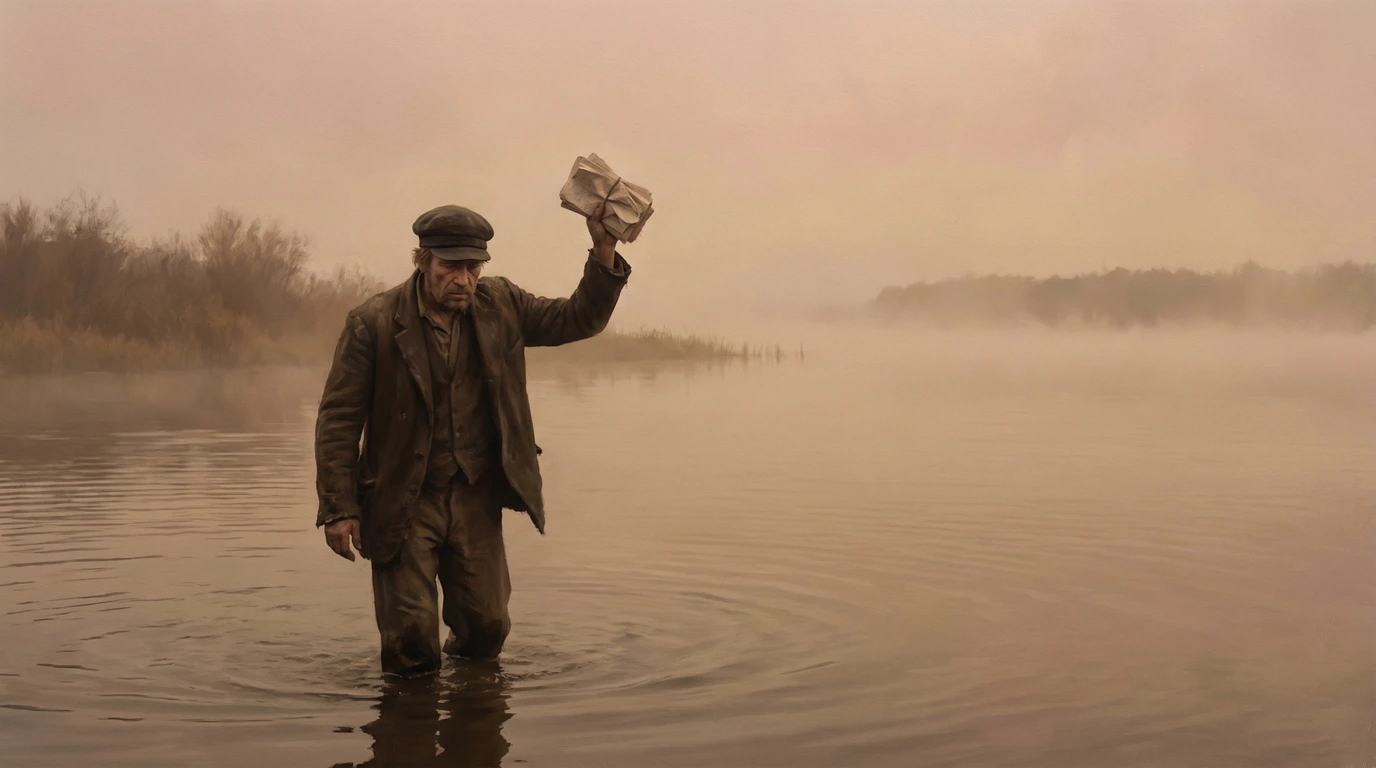
It usually hits around the middle. The exciting rush of the beginning has faded. The ending is still too far away to feel real. And I’m left in this weird, murky space where nothing feels like it’s working anymore.
I’ve abandoned more stories in this phase than I’d like to admit. For a long time, I thought that meant I just wasn’t good at follow-through. Or that those particular stories weren’t worth finishing. Now I’m starting to think something different. I think the middle is just hard. For everyone. And learning to survive it might be one of the most important skills a fiction writer can develop.
I want to describe this accurately because I spent years thinking I was the only one who experienced it this way.
The beginning of a story feels like possibility. Everything is open. The characters are fresh and interesting. The premise feels electric. I can write for hours without getting stuck because I’m still discovering things.
Then something shifts.
The initial energy fades, and I’m left with the actual work of connecting scenes. Of making sure things make sense. Of figuring out how to get from the exciting setup to the ending I sort of have in mind.
And suddenly the story feels heavy. Boring, even. I read back what I’ve written and think, this is going nowhere. Why would anyone want to read this?
The doubt gets specific, too. I start noticing all the problems. The pacing is off. This subplot isn’t working. That character hasn’t done anything interesting in three chapters. The whole thing feels like a mess I’ll never untangle.
That’s the slump. That’s where I want to quit.
I’ve been trying to understand why the middle is so consistently difficult. A few theories have been rattling around in my head.
The novelty wears off. Beginnings are fueled by discovery. You’re meeting your characters, exploring your world, setting up possibilities. But by the middle, you know these people. The world isn’t surprising anymore. The work becomes less about exploration and more about construction. And construction is just harder.
The ending feels impossibly far. When I start a story, I can hold the whole shape of it in my mind. Beginning, middle, end. Simple. But once I’m deep in the middle, that mental map gets fuzzy. The ending stops feeling like a destination and starts feeling like a vague hope. Somewhere out there, maybe, if I’m lucky.
Problems become visible. Early drafts hide their flaws. Everything feels rough, sure, but rough in a way that could turn into anything. By the middle, the flaws get specific. You can actually tell exactly where the story is struggling. And it’s tempting to believe those struggles mean the whole project is broken.
Comparison sneaks in. I don’t know why, but the middle is when I start thinking about other books. Better books. Books by writers who clearly knew what they were doing. And then I’m not just struggling with my own story. I’m also fighting the feeling that I’ll never write anything as good as the things I admire.
I’m not going to pretend I’ve solved this. But I’ve collected a few strategies that sometimes get me through.
This sounds almost too simple, but it works more often than I expect.
When I’m stuck in the middle, my standards are usually too high. I’m trying to write something good. Something that flows. Something I won’t be embarrassed by later.
So I give myself permission to write garbage. Actual garbage. I tell myself the only goal is to get words on the page, and those words can be the worst words I’ve ever written. They can be placeholder sentences like “and then some stuff happens here that I’ll figure out later.”
The funny thing is, once I start writing without pressure, the words usually aren’t garbage. They’re rough, sure. But they’re something. And something is infinitely easier to fix than nothing.
I used to think you had to write stories in order. Beginning to end, scene by scene. But when I’m stuck in the middle, sometimes the best thing I can do is jump to a scene I’m actually excited about.
Maybe it’s a confrontation I’ve been building toward. Maybe it’s a quiet moment between characters that I can already sense in my head. Whatever it is, writing that scene reminds me why I started this story in the first place.
Then I can go back and figure out how to connect things. The connective tissue is still hard. But at least I have a destination again.
This one’s risky because it can turn into an editing spiral. But sometimes, when I’ve lost the thread completely, going back to page one helps me remember what the story is actually about.
Not what I think it should be about. Not what I’m worried it isn’t about. What it actually is, based on what’s already on the page.
I usually find things I forgot. Little seeds I planted early that could grow into something if I let them. Character details that suggest directions I hadn’t consciously planned. And reading my own words, even rough ones, sometimes convinces me that the story isn’t as broken as I thought.
I have a friend who lets me ramble about my stories. She’s not a writer, which actually helps. She just asks questions like, “So what happens next?” and “Why does that character care about this?”
Something about saying it out loud makes problems clearer. And sometimes I’ll be mid-sentence, trying to explain a plot point, and I’ll realize, oh, that’s why this isn’t working. Or even better: oh, that’s what needs to happen next.
If you don’t have someone to talk to, I’ve found that writing a letter to yourself about the story works almost as well. Dear me, here’s what I’m trying to do, here’s where I’m stuck, here’s what I think might be wrong. It’s basically structured complaining, but it often shakes something loose.
This is the one that took me longest to learn.
The middle is supposed to be hard. Not because I’m doing something wrong. Because that’s just how stories work. The slump isn’t a sign of failure. It’s a sign that I’m deep enough into the project to hit the difficult part.
Every finished story I’ve ever read went through a middle. Every writer I admire has sat in this exact murky space, probably wanting to quit, probably convinced the whole thing was a disaster.
They kept going anyway. That’s the only difference between a finished story and an abandoned one.
I wish I could say I’ve conquered the middle. That I’ve found some trick that makes it easy.
But honestly, every story is different. Some middles are worse than others. Some take weeks to push through. Some clear up after a single stubborn writing session.
What I’m trying to do is build a kind of trust with myself. Trust that the slump will pass. Trust that the story is worth finishing even when it doesn’t feel that way. Trust that my past self, the one who started this thing with so much excitement, knew something that my current self has temporarily forgotten.
That trust isn’t always easy to access. But it’s there, underneath the doubt, if I’m patient enough to reach for it.
If you’re in the middle of something right now, stuck in that heavy, murky space where nothing feels like it’s working, I just want to say: I get it. It’s genuinely hard. And the fact that you’re still thinking about the story, still wrestling with it, means something.
Maybe today you push through a few hundred words. Maybe today you skip to a scene you’re excited about. Maybe today you just sit with the discomfort and decide you’re not going to quit yet.
Any of those count as progress.
What helps you when you hit the slump? I’m always looking for new strategies to add to my collection. And if nothing’s working right now, that’s okay too. Sometimes the middle just takes time.