Some days I sit down to write and the thought that surfaces, before I’ve even typed a word, is: who are you kidding?
It’s not about the writing itself. It’s about me. Whether I have any business doing this at all. Whether calling myself a writer is some kind of elaborate self-deception that everyone else can see through.
I know I’m not alone in this. I’ve talked to enough other writers, read enough interviews, lurked in enough online spaces to know that imposter syndrome is practically universal. But knowing that doesn’t always make it easier. The feeling still shows up. And when it does, it can be paralyzing.
So I’ve been thinking about this a lot lately. Not how to cure it, because I’m not sure that’s possible. But how to keep writing anyway. How to sit down and do the work even when some part of me is convinced I’m a fraud.
I want to describe this precisely, because I think there are different flavors of creative doubt, and this particular one has a specific texture.
It’s not writer’s block exactly. I might have ideas. I might even know what I want to write next. The problem isn’t the work. The problem is me.
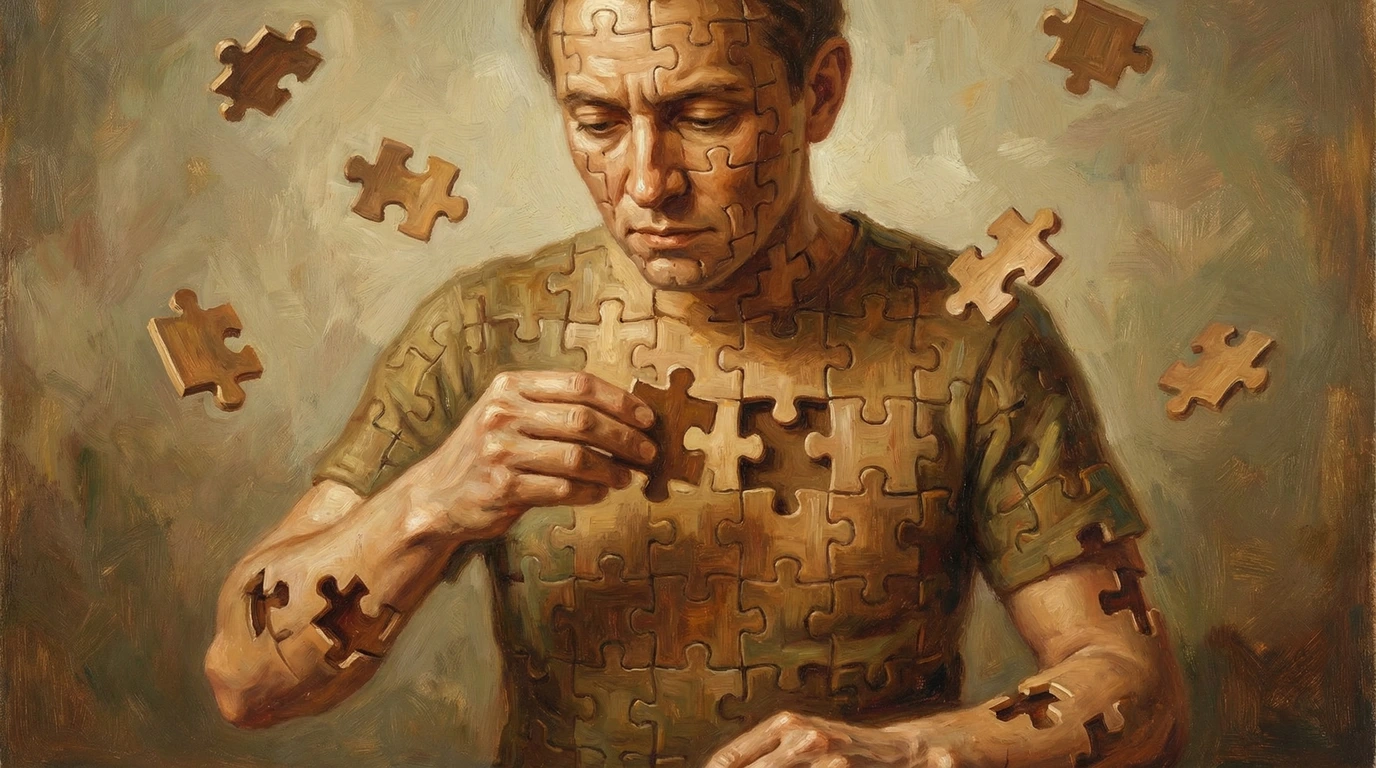
It feels like standing outside a party where real writers are gathered, knowing I don’t belong inside. Everyone in there has something I lack. Talent, maybe. Or credentials. Or some essential quality that makes them legitimate in a way I’m not.
The thoughts get specific sometimes. You haven’t published anything important. You don’t have a degree in this. You started too late. Your ideas are derivative. Your prose is clumsy. Real writers don’t struggle this much.
And the worst part is how convincing it all sounds. Imposter syndrome doesn’t feel like irrational anxiety. It feels like clear-eyed honesty. Like I’m finally perceiving myself accurately, without the protective delusion that I might actually be good at this.
That’s what makes it so hard to push through. It disguises itself as truth.
Here’s what I’ve realized sits underneath all of this: a question about identity.
Am I a writer? What does that even mean? Is it about output? Publication? How much time I spend doing it? Some internal quality I either have or don’t?
For a long time, I thought being a writer meant reaching some threshold. Getting published. Finishing a novel. Being recognized by someone with authority. And until I crossed that threshold, calling myself a writer felt presumptuous. Like wearing a costume I hadn’t earned.
But that framework creates a trap. Because there’s always another threshold. Publish a story, and you haven’t published a book. Publish a book, and it hasn’t sold enough copies. Sell copies, and you haven’t won any awards. Win awards, and you’re still not as accomplished as someone else.
The goalposts keep moving. And meanwhile, you’re sitting there, doing the work, unable to claim the identity because you’ve defined it in a way that’s always just out of reach.
I’ve been trying to think about it differently. What if being a writer is simpler than all that? What if it just means: someone who writes?
Not someone who writes well. Not someone who writes successfully. Not someone who writes with confidence or ease. Just someone who writes.
That definition feels almost too simple. But maybe that’s the point.
Imposter syndrome feeds on comparison. At least mine does.
I’ll be working on something, feeling okay about it, and then I’ll read a paragraph by a writer I admire and think, oh. That’s what good writing sounds like. What I’m doing is nothing like that.
And suddenly my own work feels thin. Amateur. Like a child’s drawing hung next to a masterpiece.
The thing is, comparison isn’t entirely useless. Reading great writing teaches me things. It shows me what’s possible. It gives me something to reach toward.
But there’s a difference between reaching toward something and using it as evidence that you’re worthless. And I slip into the second mode more often than I’d like.
What helps, sometimes, is remembering that I’m comparing my rough drafts to someone else’s finished, polished, edited work. I’m comparing my private struggle to their public success. I’m comparing my insides to their outsides.
That’s not a fair comparison. It’s not even a meaningful one.
And more than that, I’m comparing myself to writers who are further along in their journey. Writers who’ve had more time to practice, more feedback, more failures to learn from. Measuring myself against them isn’t motivating. It’s just demoralizing.
The only comparison that actually helps is comparing my current work to my own past work. Am I improving? Am I learning? Am I doing things now that I couldn’t do a year ago?
Usually, the answer is yes. Even when it doesn’t feel like it.
I’ve tried a few things that seem like they should help but don’t, at least not for me.
Waiting until I feel confident. This is a trap. Confidence doesn’t show up on its own. If I wait for it, I’ll be waiting forever. The only thing that sometimes builds confidence is doing the work, and even then, it’s not guaranteed.
Seeking reassurance. Asking someone to tell me I’m good. This works for about five minutes. Then the doubt returns, often stronger, because now I’ve added a new worry: they were just being nice. They didn’t really mean it.
Trying to logic my way out. Listing my accomplishments. Reminding myself that everyone feels this way. These are true things, but imposter syndrome doesn’t respond to logic. It’s not a rational belief. It’s more like a weather system. It passes through, or it doesn’t. Arguments don’t disperse it.
Reading about successful writers who felt like imposters. This is supposed to be comforting. And it is, briefly. But then my brain does a fun thing where it goes, yes, but they were actually talented. Their imposter syndrome was unfounded. Yours is accurate.
Thanks, brain. Very helpful.
I don’t have a cure. But I’ve found a few things that make it possible to keep going.
Lowering the identity stakes. Instead of sitting down to write as a Writer, capital W, I try to sit down as just a person messing around with words. No identity on the line. No test I’m passing or failing. Just me and a document, seeing what happens.
This sounds like a small shift, but it changes the pressure entirely. If I’m not claiming to be anything, I can’t be an imposter.
Focusing on the process. Am I enjoying this, even a little? Am I curious about what happens next? Am I learning something, even if the writing itself isn’t good?
When I focus on those questions instead of is this any good? or am I legitimate?, the work becomes lighter. More playful. Less like a performance review.
Remembering why I started. Not to be published. Not to be recognized. Not to prove anything to anyone. I started because I loved stories. Because making things with words felt like magic. Because there were things in my head that wanted to exist on paper.
That original impulse is still there, underneath all the anxiety about achievement and identity. Sometimes I can get back to it. Sometimes I can write from that place instead of from the place that’s worried about being good enough.
Doing it badly on purpose. This is a weird one, but it works for me. If I give myself permission to write something terrible, something I would never show anyone, the pressure drops. And often, the terrible writing turns out to be not that terrible. Or at least it gets me moving, which is more than I had before.
Talking to other writers. Not for reassurance, but for solidarity. Just hearing someone else describe the same doubts, the same fraudulent feelings, helps me remember that this is a shared experience. Not proof that I’m uniquely untalented.
I don’t think imposter syndrome ever fully goes away. I’ve read interviews with writers I deeply respect, writers with shelves full of awards, and they describe the same doubts. Maybe it just comes with the territory. Maybe creating things and putting them into the world will always feel a little vulnerable. A little exposed.
But I’m starting to believe that feeling like a fraud doesn’t mean I am one.
It just means I care about the work. That I want it to be good. That I’m aware of the gap between what I can do and what I aspire to do.
That gap is painful sometimes. But it’s also what keeps me learning. Keeps me reaching.
So I guess the goal isn’t to eliminate the doubt. It’s to write anyway. To show up anyway. To keep making things even when some voice in my head insists I have no right to.
Maybe that’s what being a writer actually is. Not confidence. Not credentials. Just the stubborn decision to keep going.
Do you struggle with this? The feeling that you’re not really a writer, that you’re somehow fooling everyone, including yourself?
I’d love to know what helps you push through. Or even just to hear that you experience it too. There’s something about knowing we’re all standing outside that room together, wondering if we belong inside, that makes it a little easier to keep going.