Last year I wrote a story that meant almost nothing to me. It wasn’t personal. It wasn’t exploring anything I was genuinely curious about. It was just an assignment I’d given myself, a premise I thought might be interesting, executed dutifully over several weeks.
I expected it to be forgettable. Practice, maybe. Something to keep my skills from rusting.
Instead, it turned out to be one of the most useful things I’d written in a long time. Not because the story was good. It was fine. Competent. Nothing special.
But something about writing it, about working on something without emotional investment, taught me things I couldn’t have learned any other way.
I should explain how this happened, because I don’t normally set out to write stories I’m indifferent to.
I’d been stuck for a while on a project that mattered to me deeply. A story I cared about so much that every sentence felt impossible. Every choice felt weighted. I was paralyzed by how much I wanted it to be good.
So I decided to take a break. Write something low-stakes. Something that didn’t matter.
I grabbed a writing prompt from somewhere online. A stranger arrives in a small town with a secret. Generic stuff. The kind of premise that could go in a hundred directions, none of them particularly original.
I told myself I’d write it quickly. No pressure. No expectations. Just words on a page.
And I did. I wrote the whole thing in about three weeks. It came out to around eight thousand words. A perfectly serviceable short story about a woman with a past arriving in a coastal town where people were suspicious of outsiders.
While I was writing it, I felt almost nothing. No excitement. No anxiety. No particular investment in whether the characters succeeded or failed. I was just executing. Scene by scene. Problem by problem.
It felt strange. Hollow, almost. But also kind of peaceful.
Because I didn’t care about the story emotionally, I could perceive my own process more clearly. It was like observing myself write from a slight distance.
And I noticed things.
I noticed my habits. The tics I fall into. The sentence structures I default to. The way I always describe characters’ hands when I can’t think of what else to do. The words I overuse. The transitions I lean on too heavily.
When I’m emotionally invested in a story, I can’t detect these patterns. I’m too close. Too worried about whether the story is working to notice the mechanics of how I’m building it.
But in this story I didn’t care about, the mechanics were all I had. So I noticed them clearly. Sometimes embarrassingly clearly.
I noticed where I get scared. There were moments in the drafting where I’d feel a flicker of resistance. A scene I didn’t want to write. A confrontation I was avoiding. A character choice that felt uncomfortable.
In stories I care about, that resistance is tangled up with my investment. I can’t tell if I’m avoiding something because it’s wrong for the story or because it’s hard for me personally.
But in this story, I had no personal stake. So when resistance showed up, I knew it was purely technical. I was avoiding a difficult scene not because it touched something painful, but because I didn’t know how to write it yet.
That was clarifying. It showed me where my skills needed work, separate from where my emotions get in the way.
I noticed the shapes more clearly. The arc of the story. The pacing. The way tension builds and releases. The structural bones underneath the flesh of prose and character.
When I care deeply about a story, I get lost in the details. Every sentence feels crucial. I can’t tell if a scene is too long because I’m too attached to cut anything.
In this story, I could sense the shapes. Oh, this section is dragging. That scene is redundant. This character disappears for too long in the middle. The architecture was accessible because I wasn’t blinded by love for the building.
Let me try to articulate what I actually learned.
Emotion can be a fog. I used to think caring deeply about a story was always an advantage. That passion would carry me through. That investment would make the work better.
And sometimes that’s true. But sometimes caring too much makes everything harder. The stakes feel so high that I freeze. I can’t make decisions because every decision might ruin this thing I love.
Writing something I didn’t care about showed me what clarity feels like. What it’s like to make choices without agonizing. To cut scenes without grieving. To move forward without the weight of hope and fear dragging behind me.
I’m not saying detachment is better than investment. But I now understand that I need access to both modes. That sometimes stepping back emotionally is necessary to perceive things clearly.
Speed reveals competence. Because I wasn’t laboring over every sentence, I wrote faster than usual. And that speed was educational.
The places where I got stuck weren’t random. They were specifically the places where I lack skill. Transitions between scenes. Dialogue that needs to carry exposition without feeling wooden. Physical action sequences.
When I write slowly on a project I care about, I can hide from these weaknesses. I can labor over a difficult passage until it’s acceptable, telling myself it just needed more time.
When I write quickly, the weaknesses are exposed. I can identify exactly where my craft needs development. That’s uncomfortable, but useful.
Not every story needs to mean something. This sounds obvious, maybe. But I think I’d internalized a belief that writing should always be personal. That stories should come from deep within. That if I’m not excavating my own soul, I’m doing it wrong.
Writing this story I didn’t care about gave me permission to just practice. To work on craft without the pressure of meaning. To make something functional without it being profound.
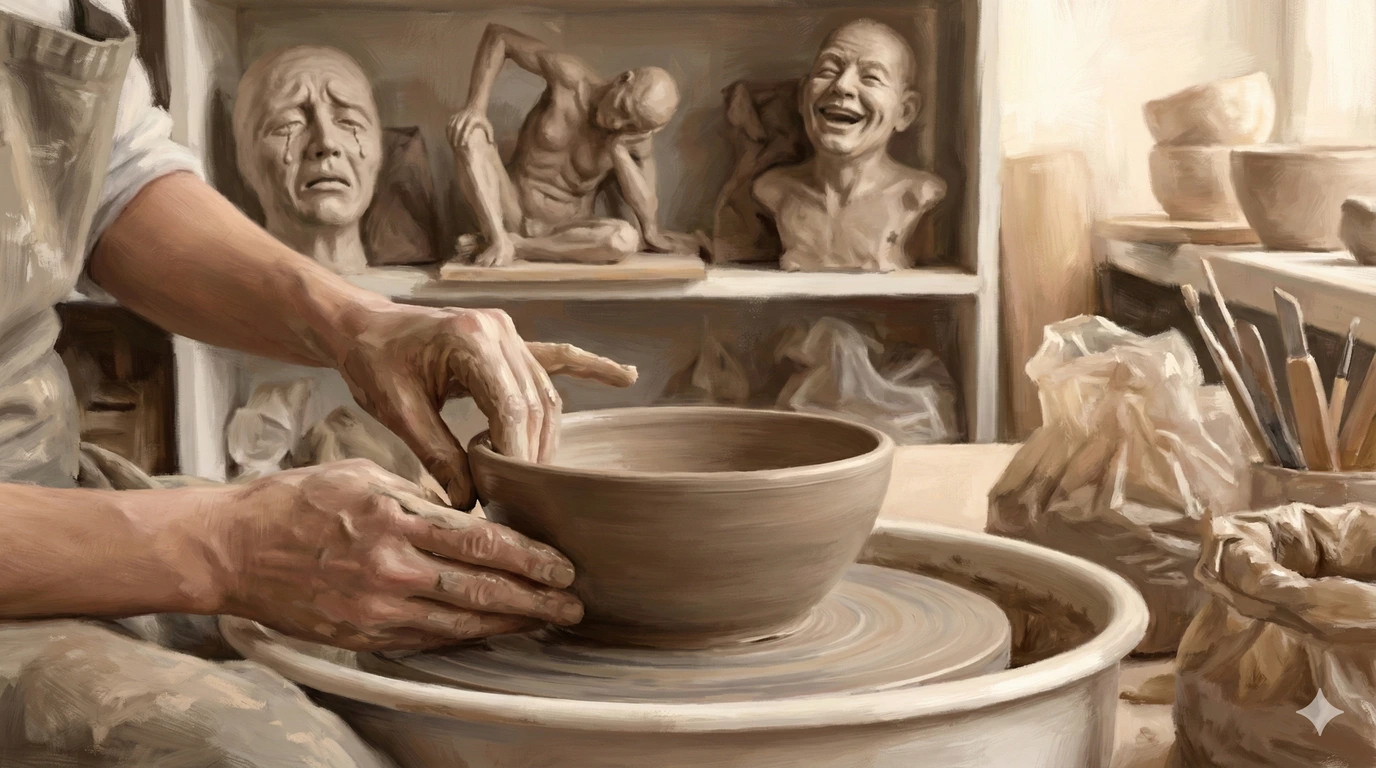
There’s a version of writing that’s more like building a chair than expressing your innermost truth. The chair still needs to be well-made. It still requires skill. But you don’t have to cry while making it.
I needed to learn that making chairs is okay. That not every project has to be a cathedral.
Here’s the unexpected part.
After I finished the low-stakes story, I went back to the project I’d abandoned. The one that had paralyzed me with how much I cared about it.
And something had shifted.
I could perceive it more clearly. The shapes. The problems. The places where I’d been stuck not because the story demanded it, but because I was too frozen to make choices.
I started making choices. Not perfect ones. But decisions. Forward motion.
I think what happened is that writing the story I didn’t care about exercised a different set of muscles. The dispassionate, technical muscles. The ones that can evaluate and decide and move on without emotional turmoil.
And then I could bring those muscles back to the work I cared about. I still cared. The feeling hadn’t gone away. But now I had access to clarity alongside the passion. I could zoom in and feel everything, then zoom out and sense the shapes.
The project still isn’t finished. But it’s moving again. And I credit the detour, the story I didn’t care about, with teaching me how to move.
I’ve been sitting with some uncomfortable questions since this experience.
How much of what I call “caring about my work” is actually just anxiety? Fear of failure dressed up as passion?
And how much does the work actually benefit from that emotional investment? Does caring make the stories better, or does it just make the process harder?
I don’t have clean answers. I think the truth is complicated. Some investment is necessary. You have to care enough to keep going, to push through difficulty, to revise when it would be easier to quit.
But past a certain point, caring might become counterproductive. The fear of ruining something precious can be more paralyzing than helpful. The weight of meaning can make every sentence feel impossible.
Maybe the goal is to care deeply about the work in general while maintaining some detachment from the specifics. To be invested in becoming a better writer without being so attached to any single project that you can’t engage with it clearly.
I don’t know. I’m still figuring this out.
Since that experience, I’ve started deliberately including low-stakes projects in my writing life.
Not everything I write needs to be the best thing I’ve ever done. Some of it can just be practice. Exercise. Keeping the muscles working while I build skills for the projects that matter more.
I’ll pick up random prompts. Write scenes that don’t go anywhere. Draft stories I know I’ll never try to publish.
It feels almost irresponsible sometimes. Like I’m wasting time on things that don’t matter when I should be pouring everything into the work that does.
But I’ve noticed that the low-stakes work makes the high-stakes work better. That the practice carries over. That the skills I develop when I’m not emotionally compromised are available to me when I am.
So I keep doing it. Making chairs between cathedrals.
Have you ever worked on something you didn’t care about and learned something unexpected from it? Or does all your growth come from the projects that matter most?
I’m genuinely curious whether other writers have had similar experiences. Whether detachment has taught them anything. Or whether I’m an outlier in finding the low-stakes work valuable.
Maybe you’ve found that caring deeply is always the path to your best work. That the fog of emotion is worth it. That detachment produces something soulless.
I’d like to hear about it either way. I’m still trying to understand the relationship between investment and craft. Between passion and clarity. Between caring too much and not caring at all.
Somewhere in between, I think, is where the work gets done.