A few weeks ago, I got completely stuck on a scene. Two characters, a kitchen, a conversation that needed to carry a lot of weight. I wrote it once and it felt flat. Wrote it again. Still flat. By the third attempt, I was frustrated enough to try something different.
Instead of trying to get it right, I decided to get it wrong on purpose. In multiple directions.
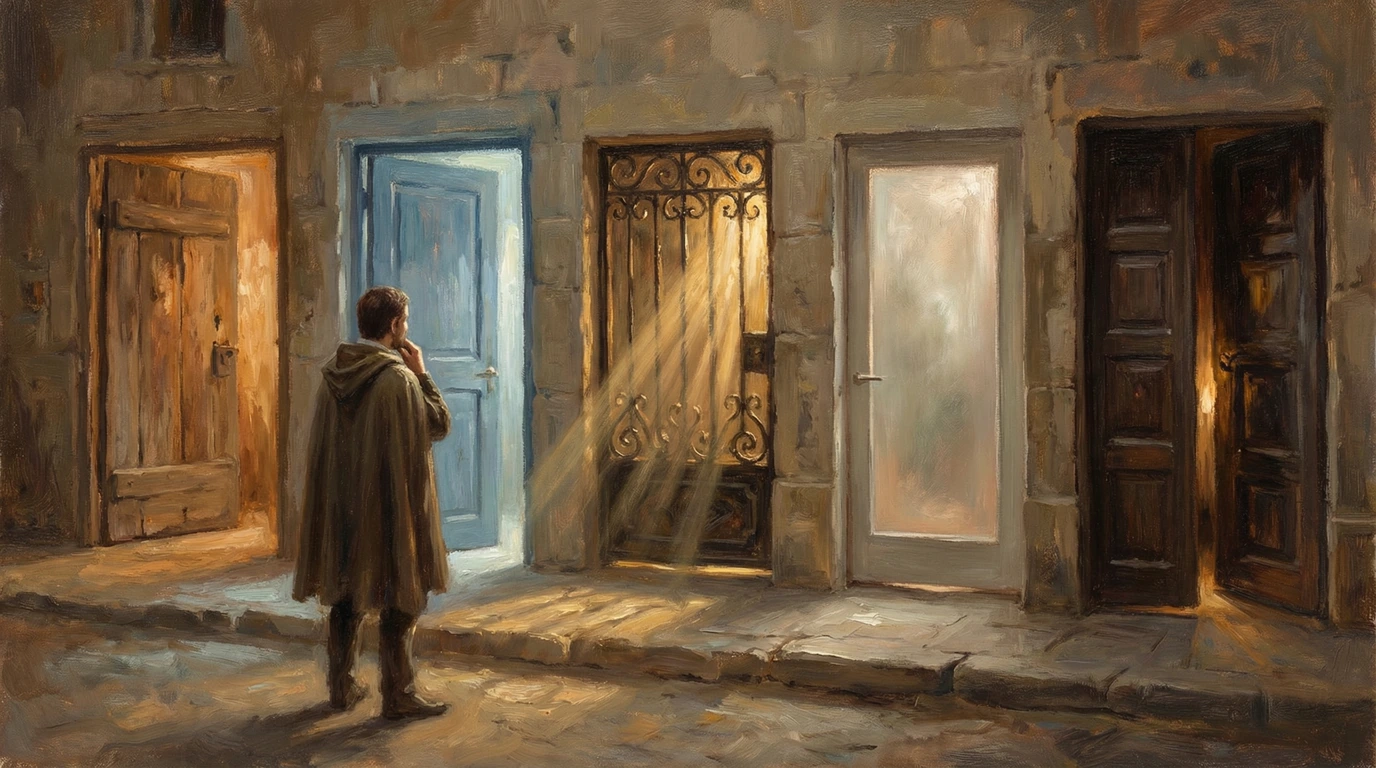
I rewrote the same scene five completely different ways, changing one major element each time. Not to find the “correct” version, but just to notice what would happen. What would shift. What I might learn about these characters and this moment.
It turned into one of the most useful exercises I’ve stumbled into. And I’m still thinking about what it taught me.
Let me set this up quickly.
Two characters: Mira and her older brother David. They haven’t spoken in almost a year after a falling out at their father’s funeral. Now David has shown up at Mira’s apartment unannounced. The scene takes place in her kitchen. Coffee is involved. Tension is definitely involved.
My first draft was fine. They exchanged some stiff dialogue. Mira was guarded. David tried to explain himself. It moved the plot forward. But something about it felt like I was just checking boxes. Conflict, check. Backstory reference, check. Emotional stakes, check.
Nothing surprised me. And if nothing surprised me while writing it, I figured nothing would surprise a reader either.
So I started experimenting.
In my original draft, David drove the conversation. He was the one who showed up, after all. He had things to say.
For the first rewrite, I flipped that. Mira speaks first. Before David can launch into whatever explanation he’s prepared, she cuts him off. Asks him directly why he’s there. Doesn’t let him control the rhythm.
What changed: Mira felt more present. More active. In the original, she was mostly reacting, which made her feel passive even though this was her apartment, her space. Giving her the first move changed the power dynamic entirely.
It also revealed something about her I hadn’t fully understood. She’s not just hurt and guarded. She’s tired of waiting. Tired of wondering when this conversation would happen. Part of her wanted to get it over with, even if another part wished he’d never shown up at all.
That complexity wasn’t in my original draft. It only emerged when I forced myself to rewrite her as the one pushing forward.
Original draft had them settling at the kitchen table pretty quickly. Mugs of coffee. Facing each other. Standard conversation setup.
For this version, I kept them standing the entire time. David hovers near the door. Mira stays by the counter. Nobody sits. Nobody gets comfortable.
What changed: The whole scene felt more unstable. Physically, there was this sense that either of them could leave at any moment. That the conversation might not happen at all. Every line of dialogue carried the subtext of are we actually doing this?
It also made the silences heavier. When two people are sitting across a table, a pause feels like part of the conversation. When they’re standing in a kitchen, not quite facing each other, a pause feels like the moment before someone walks out.
I ended up not using this version exactly, but I borrowed that instability. In my final draft, they do eventually sit, but it takes longer. The sitting becomes a small surrender, a decision to stay.
This one came from noticing how static my scene was. Two people talking. That’s it.
So I gave Mira something to do. She was making dinner when David arrived, and she keeps making it throughout the conversation. Chopping vegetables. Stirring something on the stove. Not ignoring him, but not stopping her life for him either.
What changed: The rhythm became completely different. Dialogue had to work around the task. Mira could use the cooking to create pauses, to avoid facing him directly, to have something to do with her hands when the conversation got hard.
It also added this layer of quiet defiance. She’s not going to drop everything just because he decided to show up. Her life kept going while he was absent, and it’ll keep going whether this conversation fixes anything or not.
And practically, the task gave me beats. Natural places for the scene to breathe. Moments where nothing is said but something is still happening.
I think this might be my favorite discovery from the whole exercise. Giving characters something physical to do during an emotional scene makes everything feel more grounded. More real.
In every version so far, David was there to make things right. To explain. To apologize, eventually. That was his function in the scene.
For this rewrite, I took that away. He’s not there to apologize. He’s there because he needs something. A favor. Information. Something practical that requires talking to his estranged sister even though neither of them wants to.
What changed: Everything got more uncomfortable. And more interesting.
Without the framework of reconciliation, every line felt loaded differently. Mira keeps waiting for him to acknowledge what happened between them, and he keeps not doing it. Not because he’s cruel, but because he’s convinced himself this can be a quick, transactional visit. That they can just skip the hard part.
It made David more complicated. Less sympathetic in some ways, but more human. People do this all the time. They show up hoping to get what they need without having to deal with the mess they left behind.
And Mira’s frustration deepened into something sadder. She realizes he’s not there for her at all. He’s there for himself. Again.
I didn’t use this version for the story I was writing. But I filed it away. Someday I’ll write these characters, or characters like them.
This was the most experimental one. And honestly, I wasn’t sure it would work.
I wrote the scene with almost no dialogue. David arrives. Mira lets him in. They move around the kitchen. Coffee gets made. And the whole time, the reader gets Mira’s internal monologue. All the things she’s thinking but not saying. All the arguments she’s rehearsed in her head over the past year.
The actual words exchanged are minimal. Surface-level. How are you. Fine. Coffee? Sure.
What changed: The gap between what’s spoken and what’s felt became the entire point. All that history, all that hurt, sitting in the room with them. Neither one willing to be the first to crack it open.
It was slower. More internal. Not right for every story or every reader. But it captured something true about how these kinds of reunions sometimes actually go. Not explosive confrontations. Just two people being careful around each other, testing whether it’s safe to say anything real.
I didn’t end up using any single version wholesale. The final scene was a Frankenstein mix of pieces from several attempts, plus some new stuff that emerged once I understood the characters better.
But the exercise itself taught me a few things I want to remember.
Rewriting isn’t just about improving. It’s about exploring. Each version showed me something different about who these people were and what this moment meant. Even the versions I threw away gave me information I couldn’t have gotten any other way.
Constraints generate creativity. Forcing myself to change one specific element each time made me think differently. Without that constraint, I would’ve just kept tweaking the same basic scene, getting incrementally better but never really surprising myself.
There’s no single “right” version. Each rewrite was a valid scene. Different, but valid. That took some pressure off. The goal isn’t to find the one perfect way to write a moment. It’s to find a way that serves this particular story and these particular characters.
The physical shapes the emotional. Who moves first. Whether people sit or stand. What they’re doing with their hands. These small choices change everything about how a scene feels. I used to treat blocking as an afterthought. Now I think it might be where a lot of the real storytelling happens.
Take a scene you’re struggling with. Or even one that’s working fine but feels like it could be more.
Rewrite it with one element changed. Just one. Maybe a different character speaks first. Maybe the location shifts. Maybe someone’s angry instead of sad. Maybe there’s a physical task involved.
Don’t try to make it better. Just make it different. Notice what you discover.
Then do it again with a different change. And again.
You probably won’t use most of what you write. But you’ll understand your scene more deeply than you did before. And somewhere in all those attempts, you might find the version that was waiting for you all along.
What about you? Have you ever rewritten a scene multiple times and found something unexpected? I’m curious whether other writers find this kind of exercise useful or whether it just makes things more complicated.