I have a folder on my computer called “Story Ideas” with over sixty entries in it. Premises. What-ifs. Characters I wanted to explore. Situations that felt pregnant with possibility.
Maybe five of those have turned into actual stories.
The rest sounded great in my head. Some of them still sound great. But when I tried to write them, something went wrong. They collapsed. Deflated. Revealed themselves to be less than I thought they were.
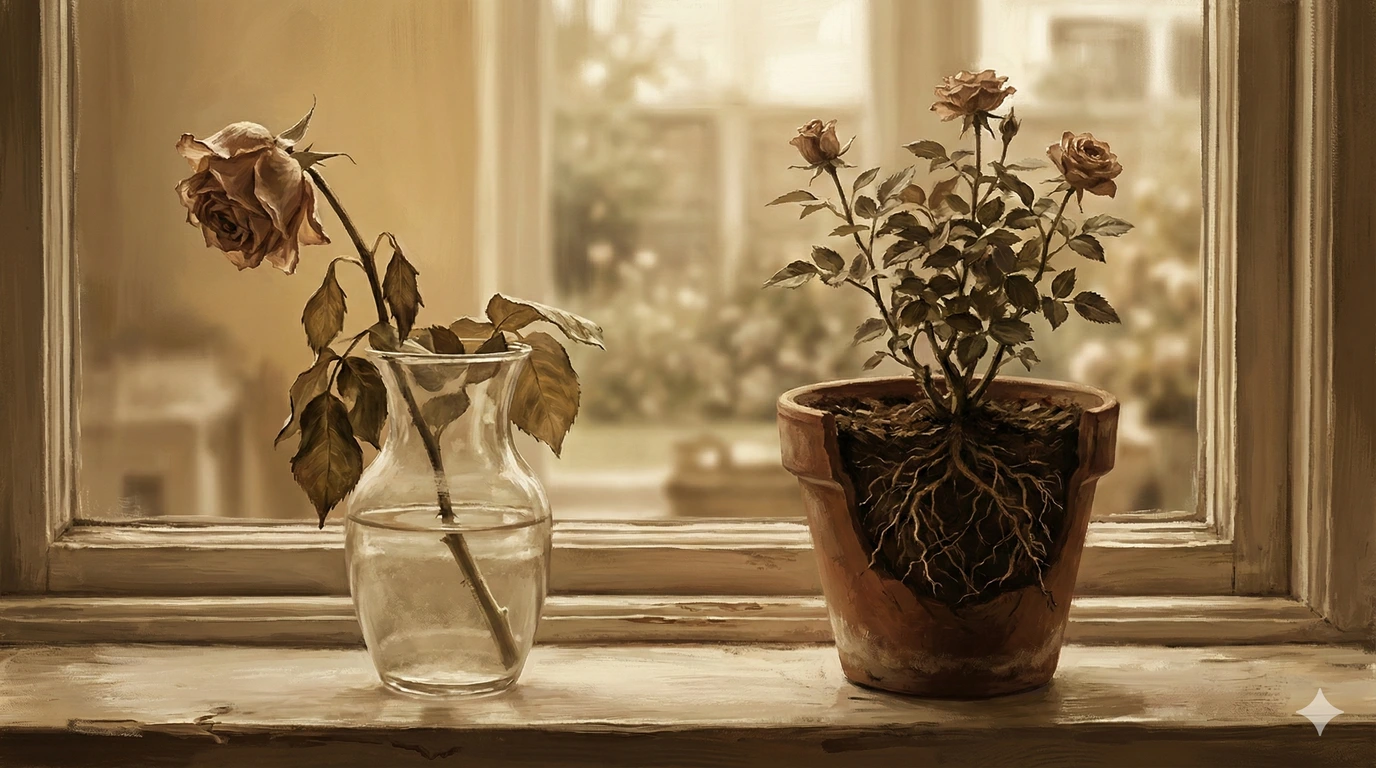
For a long time, I assumed this meant I was bad at execution. That I had good ideas but couldn’t follow through. Now I’m starting to think the problem was earlier than that. Some ideas just aren’t stories yet. They’re seeds that seem viable but don’t have roots.
I’m still learning to tell the difference.
When I get a story idea, there’s a specific feeling that comes with it. Excitement. Possibility. A sense that I’ve stumbled onto something.
Maybe it’s a character: a woman who discovers her recently deceased mother had a secret family. Maybe it’s a situation: two strangers stuck together during a citywide blackout. Maybe it’s just an image: someone standing in an empty train station at night, holding a suitcase they can’t bring themselves to open.
In that initial moment, the idea feels complete. Full of potential. I can almost sense the shape of the story it wants to become.
But that feeling, I’ve learned, is not reliable. It’s not telling me the idea is good. It’s just telling me the idea is new. My brain likes novelty. It gets excited about possibility. It doesn’t bother to check whether the possibility is actually executable.
The excitement is real, but it’s not the same as having a story.
Let me tell you about some ideas that didn’t survive.
The lighthouse keeper one. A man takes a job at a remote lighthouse after his wife dies. The solitude is supposed to help him grieve. Instead, strange things start happening.
I loved this idea. The isolation. The grief. The slow creep of something mysterious. I could feel the atmosphere I wanted to create.
But when I sat down to write it, I couldn’t figure out what actually happened. Strange things. What strange things? I had mood. I had setup. I had no plot. No engine driving the story forward. The man just sat in his lighthouse being sad while I waited for something to occur to me.
After three false starts, I put it away.
The estranged siblings one. Two sisters who haven’t spoken in ten years are forced to spend a weekend together cleaning out their childhood home after their father dies.
This felt so rich. So much history to explore. So much tension built into the premise.
But the draft just became two people being vaguely hostile to each other in a house. I knew they had unresolved conflict, but I hadn’t figured out what the conflict actually was. What specific thing had torn them apart. Without that specificity, every scene felt generic. Two people being cold. Occasionally snapping. Then retreating.
I kept waiting for the story to reveal itself. It never did.
The time loop one. A woman keeps reliving the same day, but each time, something small is different. She has to figure out what’s changing and why.
This was fun for about three iterations of the loop. Then I ran out of ideas. What changes? Why? What’s she supposed to learn or do? I had a premise, not a story. A gimmick, not a narrative.
The draft petered out around page twenty.
Thinking back on my collapsed ideas, I notice some patterns.
Premise without engine. A lot of my failed ideas were situations, not stories. Interesting setups with no built-in momentum. Nothing forcing the characters to act, change, or confront something.
A story needs movement. Not just physical movement, but narrative movement. Something has to be at stake. Something has to be pursued or avoided or decided. My lighthouse keeper had a situation but no engine. He was just there, existing in his grief and his atmosphere, with nothing pushing him forward.
Characters without desire. Related to the engine problem. My estranged sisters wanted to get through the weekend without fighting. But that’s a passive goal. An avoidance. It gave them nothing to pursue, only things to dodge.
Stories seem to work better when characters want something specific and are actively trying to get it. Even if what they want is complicated or wrong or changes over time. The wanting creates forward motion.
Mystery without answer. The time loop idea collapsed because I didn’t know the rules. What was causing the loop? What would end it? I’d started writing before I understood my own premise.
Some writers can discover the answers as they draft. I’ve read about people who figure out their mysteries while writing them. But for me, if I don’t have at least a rough sense of where the mystery is going, I end up wandering in circles. The reader asks questions the text can’t answer because I can’t answer them either.
Mood without events. The lighthouse story had atmosphere. I could feel it so clearly in my head. But atmosphere isn’t plot. Mood isn’t narrative.
I’ve learned that my initial excitement about an idea is often excitement about a feeling I want to create. The loneliness of the lighthouse. The tension of the estranged sisters. But feelings need to be carried by events. Scenes. Things happening. If all I have is the feeling, I don’t have enough yet.
The ideas that actually turned into stories share some qualities.
I could sense the first domino. Not the whole plot, but the inciting moment. The thing that knocks everything else into motion. The call that comes in the middle of the night. The letter that arrives unexpectedly. The decision that can’t be taken back.
When I can identify that first domino clearly, the story usually has enough momentum to carry me forward. Even if I don’t know what happens next, I know something has started.
The character wanted something specific. Not just to survive or to feel better or to get through a situation. Something concrete enough to drive decisions. To get her daughter back. To find out who sent the letter. To make it to the border before morning.
The specific wanting gives me scenes. What does the character do next to pursue what they want? What gets in their way? How do they respond?
I understood the central conflict. Not every detail. But the basic shape of the tension. What’s pushing against what. Who wants incompatible things. What can’t be easily resolved.
Conflict, I’ve realized, is the thing that turns a situation into a story. My estranged sisters had history, but I hadn’t identified the conflict. I knew they were angry. I didn’t know about what. Not really. Not specifically enough to build scenes around it.
There was something I wanted to figure out. This is less tangible, but I think it matters. The ideas that survive have some question underneath them. Something I’m genuinely curious about. Not a plot question, but a human question.
What does it mean to forgive someone who isn’t sorry? How do you move forward when you can’t go back? When does loyalty become self-destruction?
I don’t need to know the answer. But having the question gives the story something to explore. A reason to exist beyond the plot.
I’ve started doing a kind of test before I commit to a story idea.
First, I write down the premise in one or two sentences. Just to make sure I actually know what it is. Sometimes an idea that feels clear in my head gets fuzzy when I try to articulate it. That fuzziness is a warning sign.
Then I try to answer a few questions.
What does the main character want, and what’s stopping them from getting it?
What’s the first scene? What happens to kick everything off?
What’s the central conflict? Who or what is pushing against who or what?
Why does this story matter to me? What am I trying to understand?
I don’t need perfect answers. But if I can’t answer any of them, even roughly, the idea probably isn’t ready yet. It needs more time to develop. More thinking. More noodling.
I’ve learned that putting an underdeveloped idea into draft too early can actually make it harder to finish. Because now I have failed pages. Baggage. Evidence that the idea doesn’t work. When really, I just started too soon.
I used to feel bad about my folder of collapsed ideas. All those failed attempts. All that wasted time.
Now I think about it differently.
Those collapsed drafts taught me things. They showed me what was missing. They helped me understand the difference between a premise and a story.
And some of those ideas might still become something someday. Not the way I originally imagined them. But seeds can stay dormant for a long time. Sometimes I’ll be working on something else entirely and realize that the estranged sisters finally have a real conflict. That the lighthouse finally has an engine.
The ideas aren’t dead. They’re just waiting for me to figure out what they actually need.
I’m not claiming I’ve mastered this. I still get excited about ideas that turn out to be hollow. I still start drafts too soon sometimes, seduced by the initial feeling of possibility.
But I’m getting better at recognizing when an idea is ready and when it’s not. At asking the questions that reveal whether there’s a story underneath the premise.
And I’m getting more patient. More willing to let an idea sit in the folder for a while. To revisit it occasionally. To wait until it grows the roots it needs to survive the draft.
Do you have ideas that sounded great but collapsed when you tried to write them? I’m curious what you learned from them. What was missing. Whether you ever went back and found a way to make them work.
Or maybe your process is different. Maybe you discover the story while drafting and the collapsing is part of how you find what works.
Either way, I’d like to know. I’m still collecting data on how stories survive and why some don’t.